If a space is reserved but not marked, is it really reserved?
Accessibility isn’t just about having the right structures; it’s about making sure people can find and use them. For designated accessible parking to serve its purpose, it must be clearly marked on the ground and with upright signs that display the International Symbol of Access. Directional arrows should also guide drivers from the entrance or gate to the parking spot, especially in larger compounds or facilities with multiple access points.
This isn’t just a matter of compliance. It’s about dignity. It’s about efficiency. It’s about making a space truly usable.
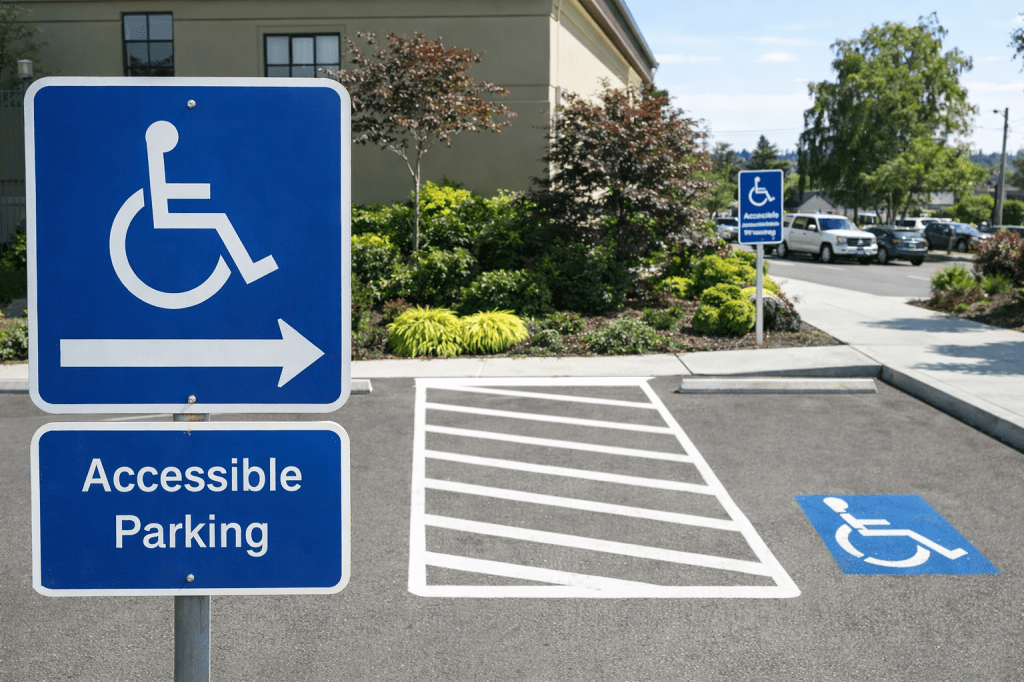
Without proper signage:
- People miss the designated space and park elsewhere.
- Those who need the space can’t find it or worse, can’t access it.
- The very purpose of the investment is lost.
And it’s not just wheelchair users. Parents with strollers, people with short-term injuries, older adult, all benefit from well-marked, easy-to-navigate parking.
Good Signage is a Smart Investment
Think about it: a properly signposted parking space helps people feel welcome before they even step inside. It tells them your space considers everyone. That’s powerful.
Businesses gain:
- Better first impressions
- Faster customer flow
- Fewer complaints or accidents
- And often, repeat visits from people who felt included
At IncluSphere, we create thought-provoking content to open eyes and open doors. If our posts help you see things differently, please consider supporting us.
Let’s keep breaking barriers, one post, one bold change at a time.
 IncluSphere
Leave a comment